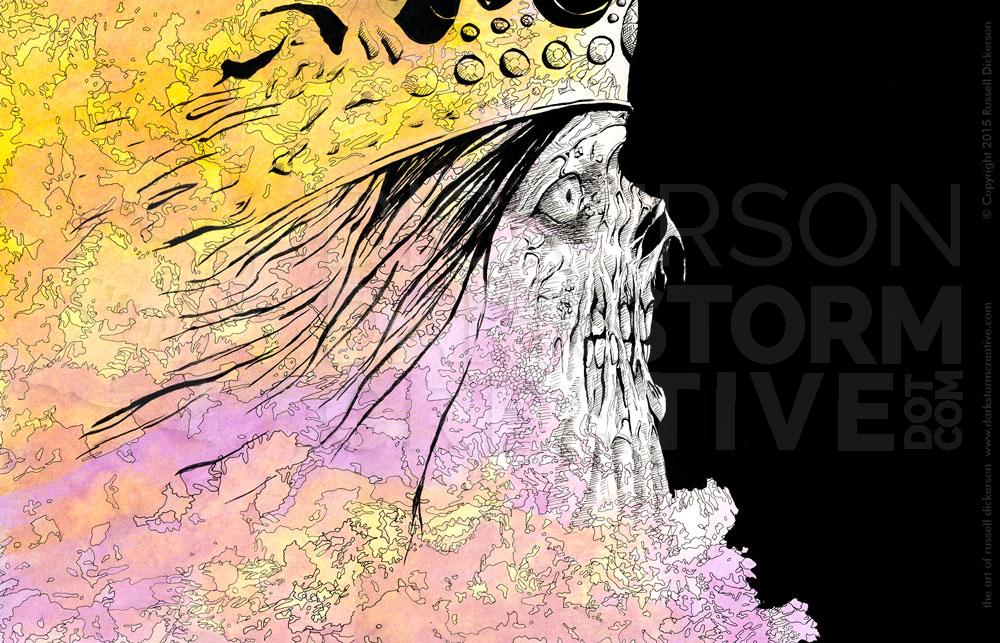
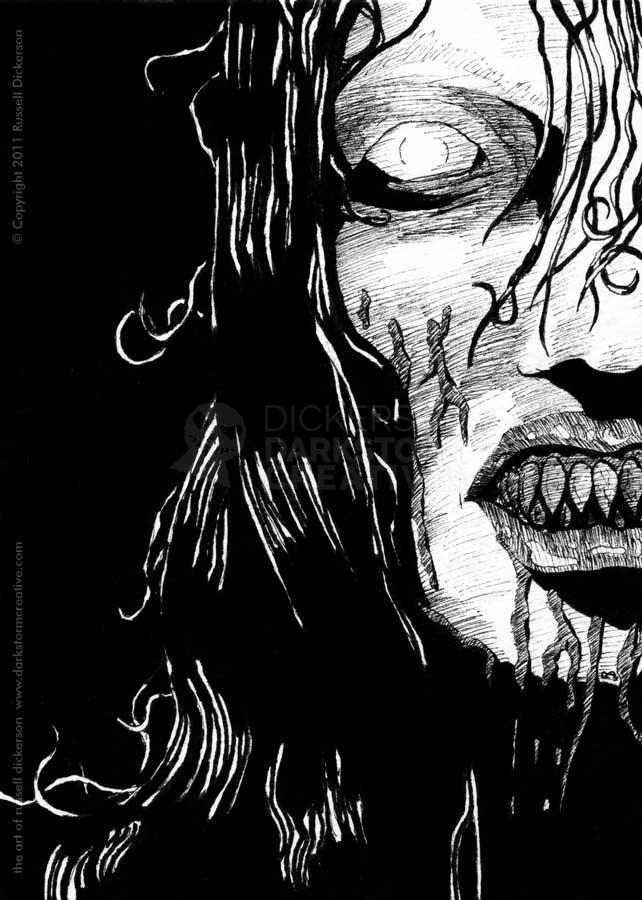
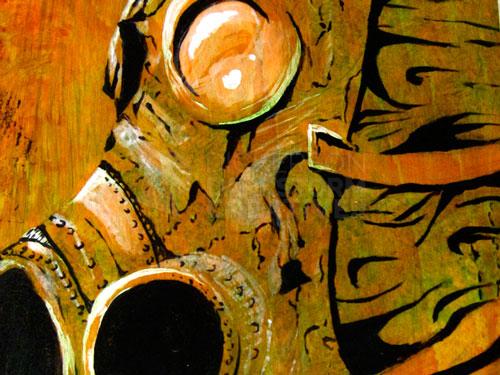
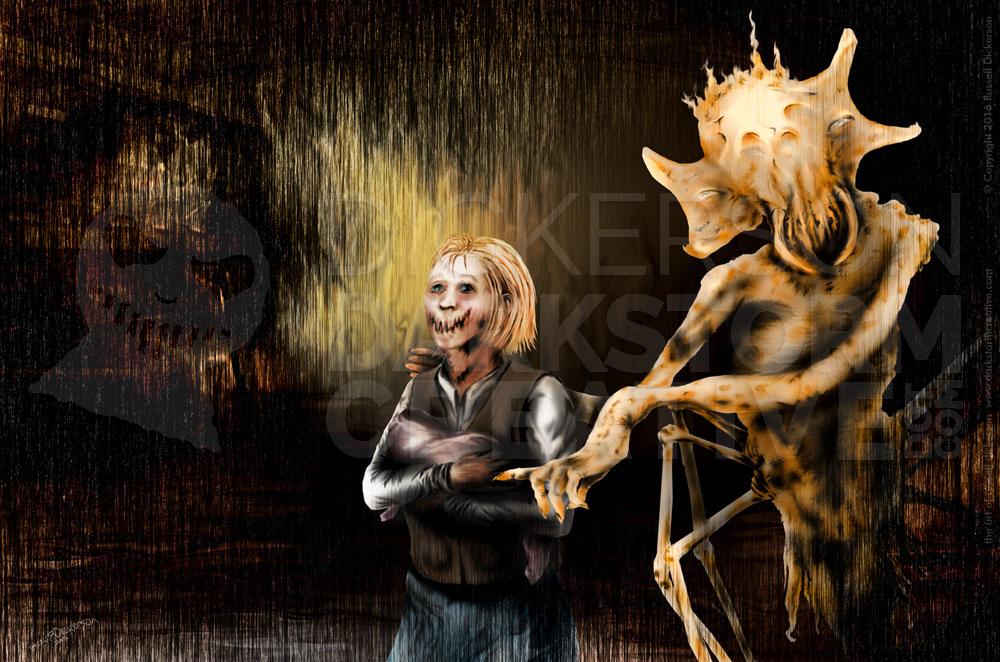
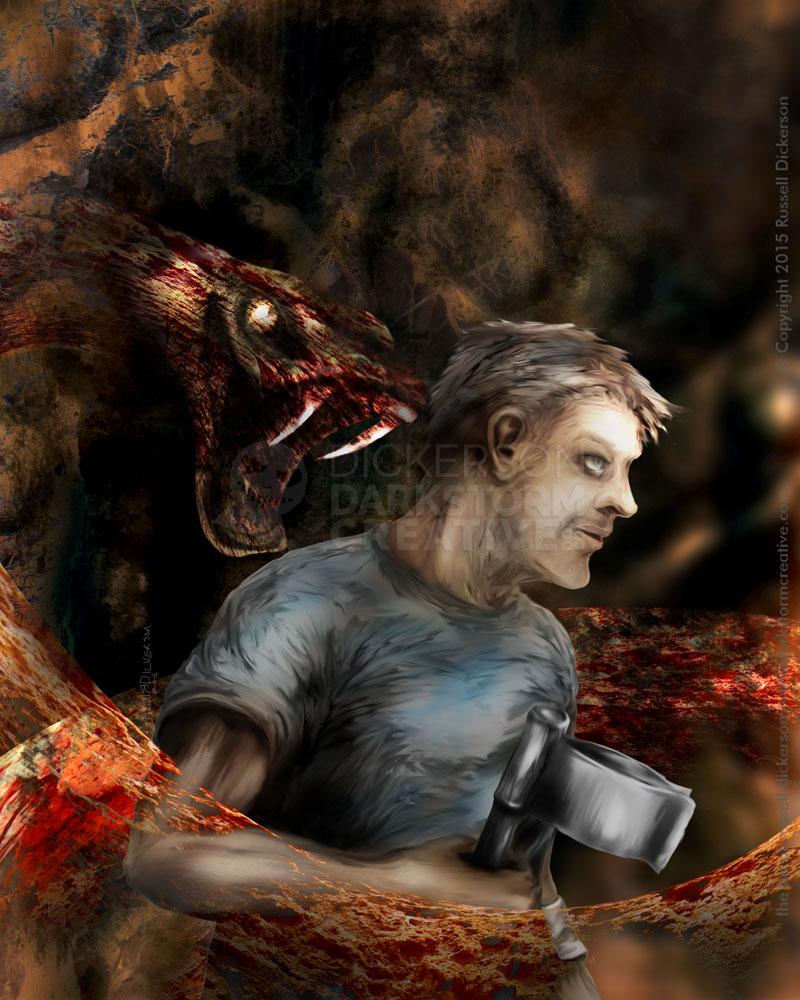
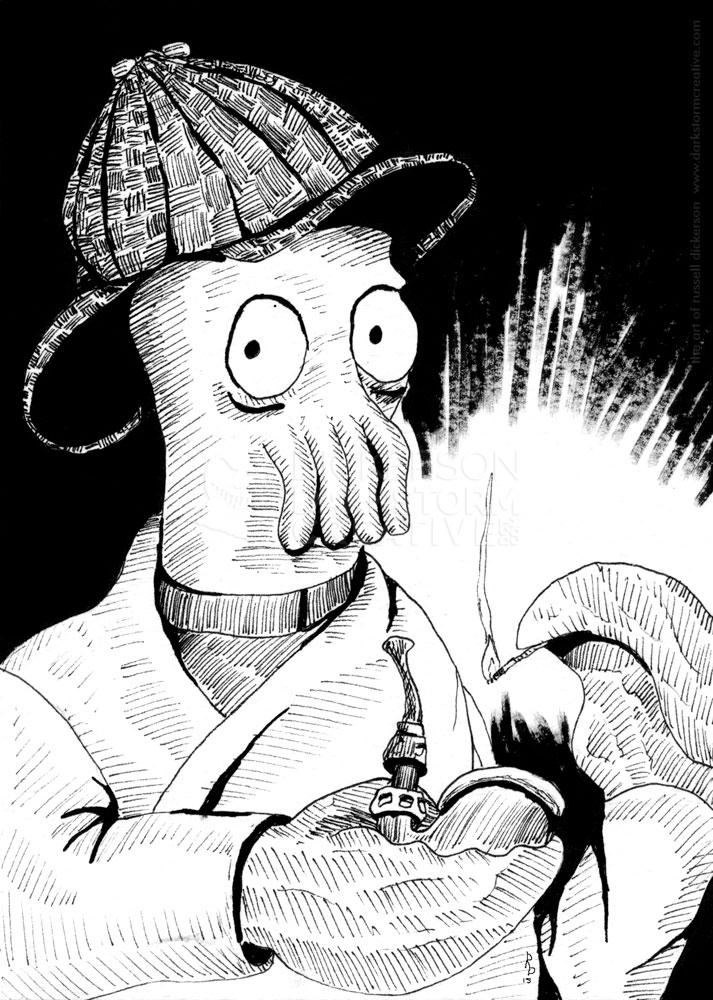
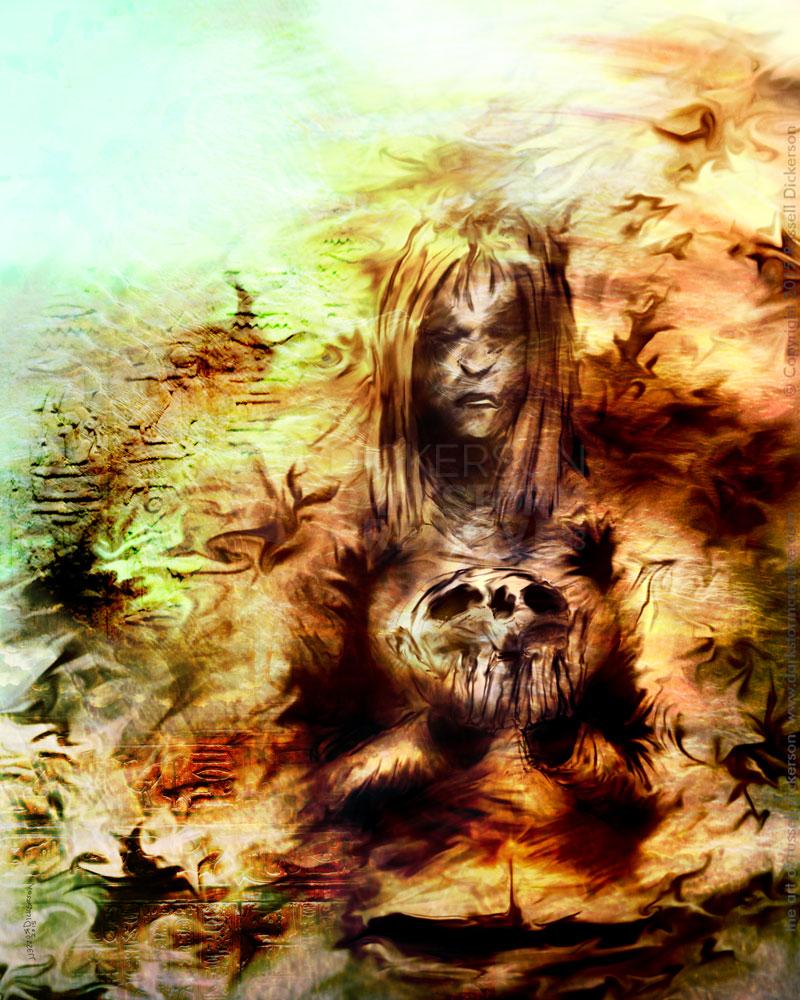
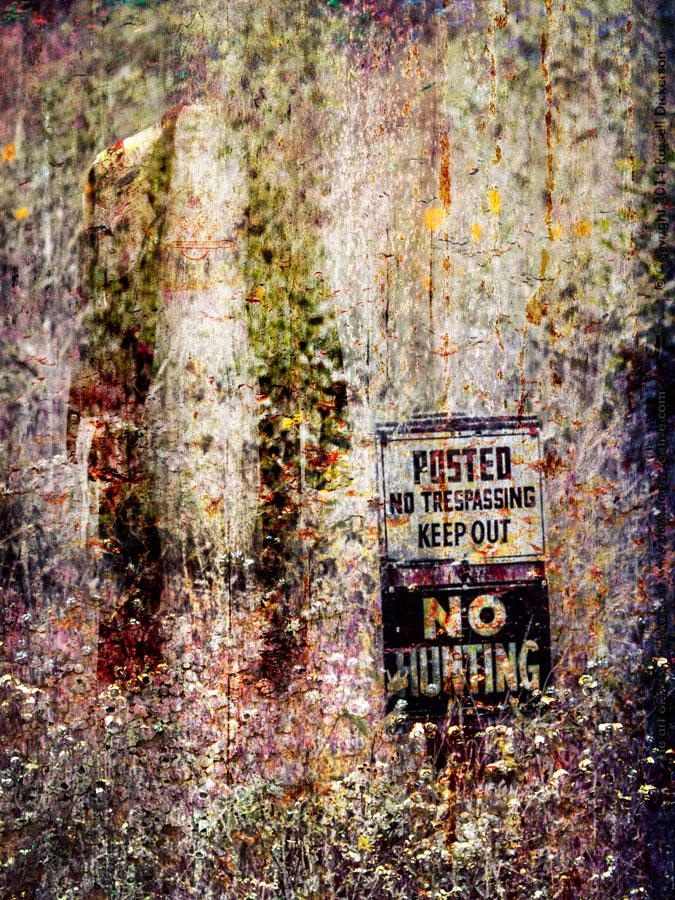
Last night was my first night in The Gallery Underground, an alternative art gallery in Fort Collins, Colorado.  This is the second local gallery I’m in (I’m also in the OnDisplay gallery, which I’ll feature soon), and it’s great to try my hand at gallery work.

I wasn’t lucky enough to sell anything last night, but we did (“we” being myself and fantastic artist Jeff Herndon) get quite a lot of traffic in our booth. Most people actually stopped and looked at our work, and we even had a few conversations about our work and how we do it.

I think the experience is important for an artist, not just for feedback (and, frankly sales), but also the interaction with people genuinely interested in the art. Many artists fall on the introverted side of things (ahem… I have NO idea what I’m talking about… carry on), and getting to talk to an interested public helps an artist understand the world just a little bit better.

On top of that, you might even get a few more fans out of it.

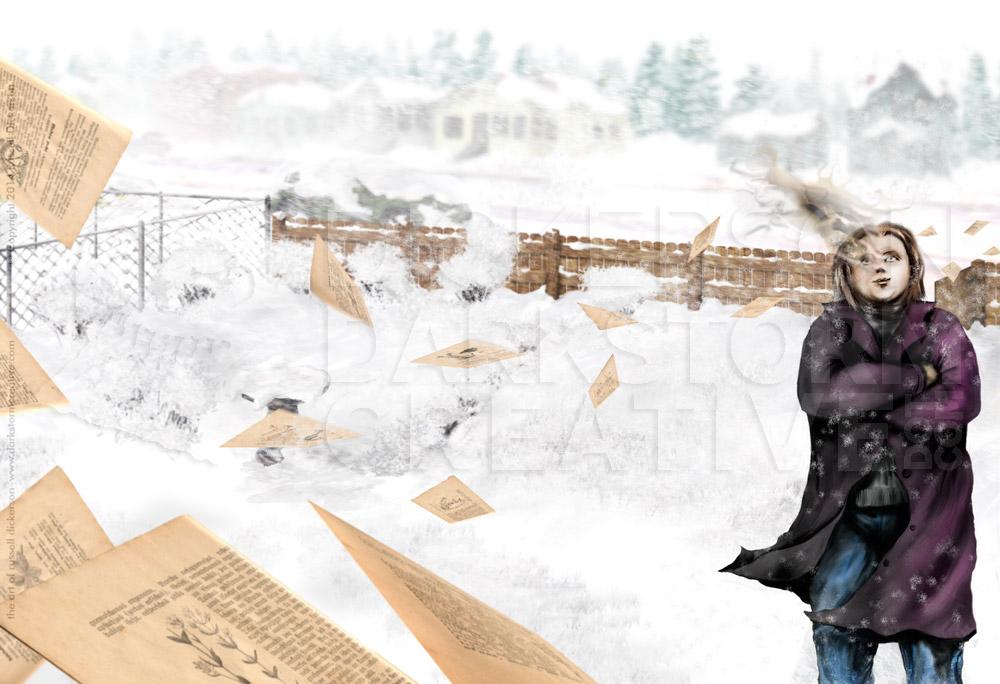
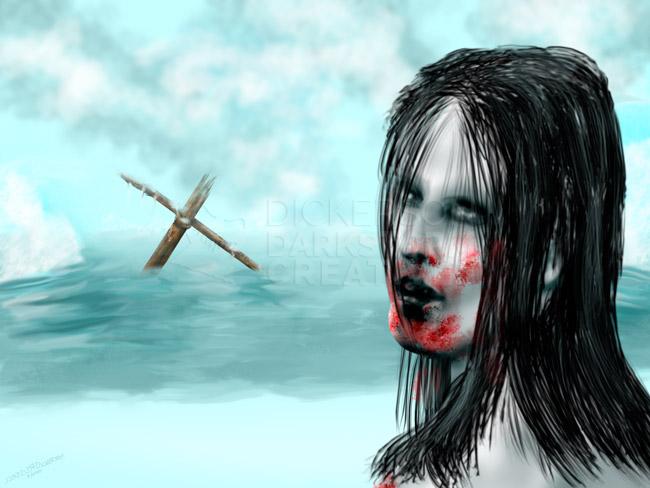
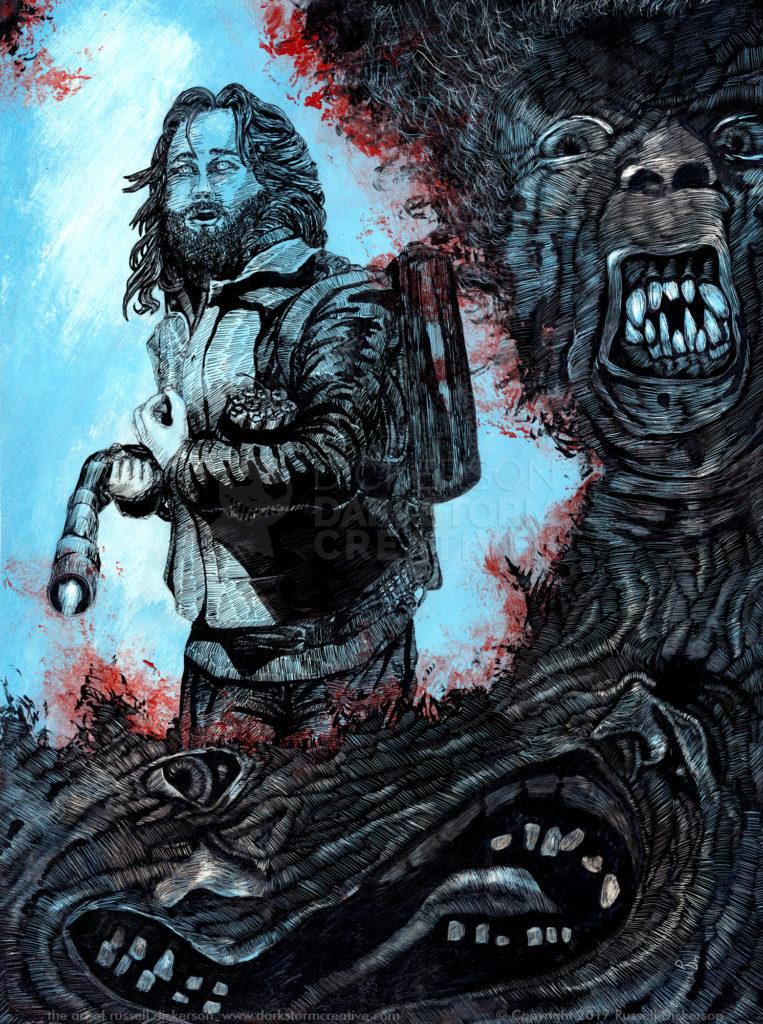
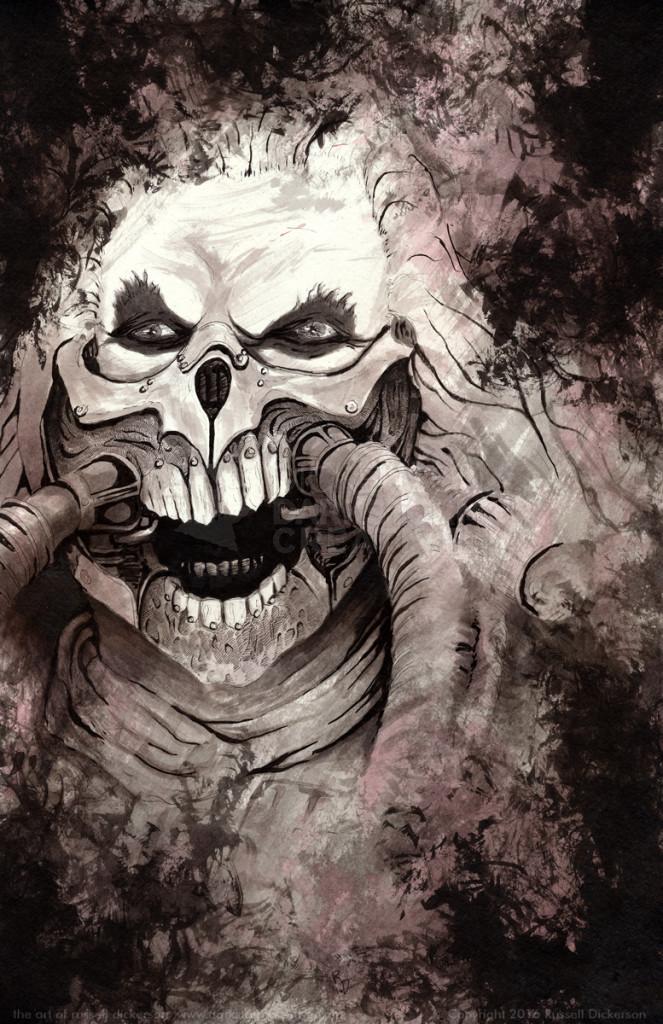
Below is what my setup at the gallery looks like, followed by a legend of sorts that shows which image is which. The most popular piece last night was not the “Infection” frame that I featured the other day, it was actually “A Violent Reaction”. Go figure.


Tags: , , , ,

I like seeing how art evolves, from the beginning of the thumbnail sketches all the way through the final product. I think you can literally see an artist’s though processes as they work through issues, try new things, and complete what their vision is.

In my case, it might be more like watching chaos unfold in front of you.

I created a video/slideshow of my cover art for author Brian Keene‘s novella Scratch, which was recently released by Cemetery Dance Publications. It hopefully shows the genesis from the initial thumbnail sketch through the final product, and as always let me know what you think.


Tags: , , , , ,

I never just charge into a piece for the sake of doing art, I always let it mull around in my head some first. Sometimes I have a pretty good idea and I just need to smooth things out. Other times, there’s a lot of thought in what the scene portrays, who’s in it, what’s their motivation, did they just do something or are they about to, so on and so on. If you don’t think about the overall work ahead of time, you’ll end up with a mess.

I tend to think of everything in a scene as being it’s own layer. It will have it’s own world to live in, it’s own feel. In turn, it will get other textures and influences from other layers, and in turn influence those other layers. Before too long, everything is interacting with everything else, and you have a scene.

But that’s part of my nature too. When I’m thinking about something, I see it in my head in three dimensions. Something that doing sculpture long ago helped me with was seeing things in my head that way, and now I spin them in all different directions until I find the right image to work with.

I’ve seen quite a few bad covers lately where the artist is obviously only thinking in a flat, boring way. They get some idea for a character, and in their head that character and all of the surroundings live at one level. So when they do the artwork, that’s how they think. Everything ends up flat, with no fading, no differences in contrast or color, and no indication that what’s they’ve created is it’s own world.

I think that’s important as an artist, especially as an illustrator. No matter what your style is, be it a realistic style or something more abstract, you are still pulling the viewer into your world, and they have to buy it. If they see it as a flat piece of art, they won’t be moved to explore your world, and, if it’s the cover, you as the cover artist didn’t do a good job of selling the work.

The cover I just finished (more or less, there are a few tiny tweaks) started out as more of a flat piece. So I started spinning it my head, changing angles and perspectives, and there’s this subtle voice in my head that keeps saying “nope. nope. not that one. nope.” Until it clicks, then I start whittling it down to the real image. Then when I get it set in my head, I ask myself how I can make it better, more dramatic, and more interesting.

Usually that leads to me picking the absolute hardest thing I can think of doing. Which sometimes frustrates me, but hopefully afterward makes me a better artist. The best example of that is “In the Wrong World” based on a Peter Straub story I did for Cemetery Dance last year:

In the Wrong World

In the Wrong World

I spun that around in my head until I thought it would look cool, then I remembered that it’s a really difficult perspective to pull off. Way high, at an angle to everything. On top of that, I completely changed my working style from doing everything in layers and textures to doing everything as a painting. Everything has a stroke, either direct paint or a smudge stroke with a paint brush tip (save for the photo on the wall and the texture on the mirror).

Both changing my style and my working techniques, as well as such a rough perspective, was almost idiotic to try and pull off all at once. But I went for it and, despite a few flaws here and there, I think the emotion of the piece speaks for itself. Several have told me that it’s my best piece (I don’t think I have a “best piece”, only decently done parts of pieces), so I might be on the right track with it.

Overall, I think all artists, in fact nearly every piece on the earth, has some kind of flaw, even if it’s so tiny only they ever know it’s there. The trick with really good art is that those flaws don’t detract from the work itself, and often even enhance it. Artists sometimes just want to create art, but that’s not how I approach it. I want to move someone to some emotion, to ask questions of themselves and of the work, and hopefully give them reason to think about the image for a long time after.


Tags: , , , ,

Since January of 2010, Jason Sizemore and MG Ellington over at Apex Magazine have given me the opportunity to talk on their blog each month about art, and how I create it.  Now, so far, it’s been mostly rants about the things I see wrong with art and with the various genres I’m a part of.

I thought I would sum them up as they are so far, as I’ve done quite a few now.  Please make sure you visit Apex Magazine and support the small press, and leave lots of comments for discussion over there.

Here they are, in order, once a month starting in January:

My God, What a Stupid Looking Cover

WTF? Really? You can’t just tell me who the artist is?

Sure you can steal from me! Art? Sure! First born? Why not?

Why the hell would I help you? You’ll steal all my ideas!

Here at the end of all things

Life, liberty, and the pursuit of—Hey! Why aren’t you mowing the lawn?

Practice is for losers

Yes, I can do that same piece of art over and over and over and…


Tags: , , ,

I’ve been very anxious to show everyone this, and now, upon the release of the novella, I can do just that. Below I’ve attached a number of pieces of art that I did for author Brian Keene’s book Scratch, just released from Cemetery Dance Publications.

Scratch, if you don’t follow Keene’s work (and his followers are Legion), is the story of a giant snake. One that gives our characters quite a bad time.

I have to say, working on such an in-depth and extensive project was a daunting idea at first. But working with an author like Brian, who is so open to ideas and so helpful with the ones I came up with, was just fantastic. All the fine folks at Cemetery Dance are very supportive and wonderful to work with as well, and overall this was a great experience.

Now, the art itself is spread quite thoroughly throughout the book, and while the esteemed Mr. Keene doesn’t think that the art alone gives away the story, it’s certainly a possibility.

So, fair warning. The art is chock full of spoilers.

One more time, for those Keene fans (and others) who haven’t read it:

SPOILERS!!!!

If you’d just like to see what the art looks like, please enjoy the full gallery below. Every image in Scratch is there, please let me know what you think.

If, however, you’d like a bit more “meat” with it, follow along below this (and to the next page) for comments on how I created the art, thoughts on it, and so forth.  REALLY spoiled then, and I mean it.

After this, there’s no going back, because the rest below contains

SO MANY SPOILERS!!! NOT KIDDING!!!

Without further ado, follow along to the next page for my insights.


Read the rest of the entry »


Tags: , , , , , , , , ,

I’ve been a part of a local gallery for several months now, and it’s been a great experience.  Having been an illustrator for so many years, it’s been interesting to explore the prints and fine art side of things.

Luckily, the On Display Gallery in Fort Collins, Colorado (just up the road from home) specializes in alternative art. I definitely fit in there, and I’ve had a number of good comments from people in the gallery (and a handful of sales).  It’s been a great learning experience, and I’m happy to be in a good place with good people.

As I mentioned before, it’s not necessarily easy for me, as an illustrator, to pick art that someone wants to post in their home. A cover work has a unique feel and point to it, as does interior art, and art for your wall is no different.  There’s a certain feel to a piece that has to work correctly for someone to put it on their wall.

We’ll see how my continued gallery art goes, but so far so good.  Below are the pieces I currently have in the gallery, and there are also postcards and bookmarks of mine there. There is one that I have in the gallery that does not appear below.

If you are in the Fort Collins/Northern Colorado area, or will be through on a trip, go check them out and let me know what you think.


Tags: , , , , , ,

Sometimes, I shudder to post new ideas or new techniques that I try. I never know if they really work out, if they are ok but just need work, or if they are so awful that the sun will shrivel up and we’ll all die.

But, I also think that as an artist I always need to push ahead, to grow and to get better at what I do.  Posting the results on my website, while giving the distinct possibility that some new editor or fan might run away screaming, also forces me to learn and to adapt much more quickly.  I can’t hide behind the flaws, they are there for the whole world to see.

I’ve also, over the years, read plenty from other artists (on the web, in magazines and books, and so on). Those I’ve learned the most from are the artists who are willing to put their art out for the world to see, warts and all.  You can see their progress from piece to piece, and see how they developed as an artist.

You also see that they are human.  Often, when I see the final art by another artist, I tend to skip the part where they had to learn their techniques.  I see the final product, but when I get to read about their techniques, their process, and especially where they’ve had to learn from a mistake I learn so much more from them.

In that spirit, below is my very first acrylic piece. Usually I’m a digital artist (for many reasons), but I always like trying different media and techniques.  Now that I have a real office/studio, I have the physical space to try things out.

Here, finally, is my very first acrylic piece. I call it, The Thing That Crawled. No giggling allowed.  Though, I guess I wouldn’t hear it anyway.

Or would I….

The Thing That Crawled

The Thing That Crawled


Tags: , , , , ,

I gave the title for this blog first, but it’s only true in certain circumstances (for me, anyway).  I’ve been a creative person (be it writing, art, photography, etc.) for my whole life, but I’ve also had the ability to work with the more technical nature of the world as well. It’s a split in the brain (not literally, though sometimes the headaches feel like it) that can sometimes lead to interesting things, but often leads to chaos.

I try to ignore my technical leanings, as often I am chained by them. Much of the time, I’m seen as the “tech guy” or the “programmer”, when in reality I’d much rather my artistic talents be noticed (luckily, today they have been a bunch). My seemingly abrupt change in direction (coming soon!) will shock some, however it’s only design/art that I want to do from now on.

But, occasionally, the tech side comes in handy. Case in point: earlier I was discussing QR Codes with the owner of the best coffee shop there is (go here, you can even buy their coffee online). Technology that I came across awhile back, and implemented on my business cards last month.

QR codes are images, much like bar codes on most things you buy in a store, that can contain information.  Not just a number like many codes you see around, but lots of information.  QR codes can handle thousands of characters, or, if you want it simple, just a website link.

Here’s mine:

QR Code for darkstormcreative.com

QR Code for darkstormcreative.com

My QR code leads back to my website when you use a smartphone.  Here’s how it works:

  1. If you have a smartphone with a camera, like an iPhone or an Android phone, you can download (often free) software for QR codes, usually just called a “QR reader”.
  2. Once that’s installed on your phone, take a picture of the image above with that QR reader software.
  3. The software will (or should) automatically send your phone’s web browser to my website.  That, in fact, may not help you if you are already reading this.

Right now, I have that code on my business cards so that people with a smartphone can go right to my website. But it could easily be full contact information like address, phone, and email.  It could be a short bio with a link back to the site.  It could be a treatise on modern warfare and it’s lack of Pixy Sticks and gum. It’s up to whomever creates it. My friend uses it on sales labels at a gallery.

You’re starting to see these codes now in magazines, on billboards, even on products.  As a creator, there’s no reason not to put it on some things and push my website. It’s quick and easy, you can just go to qrcode.kaywa.com and generate your own. Then just put it on your website, your marketing materials, or whatever need you have.

If anything, it’s been a great conversation piece.  Either people whip out their smartphones to give it shot, or they start a discussion on the rest of the card and my art, or even technology.  That’s what the business card is for in the first place, to generate interest, and something like this can be a great way to get into the minds of those you want to impress.

Feel free to use mine and pass it on, and all of you (maybe “both of you” is more accurate) should go give it a try.

Opinions?


Tags: , , , , , , ,

Last year, a couple of friends (Mike Oliveri, Cullen Bunn, and a few others) were really talking up using a small writing or sketching book to jot down quick ideas. I’ve carried a larger sketchpad in my backpack for a long time, but I’d considered something smaller to compliment it.  So, I ended up purchasing a Moleskine, one with frames for storyboarding, that fits right in a pocket.

It’s been one of those things that, as an artist, has really helped how I work.  I use it for practice sketching, as well as for jotting down quick ideas. Sometimes it’s an art idea, sometimes a story idea, or both:

Other times, I’ll get some quote or idea running through my head, and I just need to get it down quick.  It can be decently detailed, just a line, or even just a scribble.  Believe it or not, I know exactly what all those scribbles on the right mean:

Since I’m working on both painted and cartoon work, I’ve also been toying with character ideas and sketches.  I’m trying to expand the idea in my head of what a person looks like, since there are so many variations.  I’m also trying more elaborate poses and emotions as well:

I decided with all of my general sketching, a long time ago, that I just have to go with the flow.  Sometimes it’s horror, sometimes it’s a cartoon or a thumbnail.  Often, I’ll jot some smartass remarks in as well.  This is a good example, as the Moleskine’s two frames per page design switched in the middle of the book to a more frame-by-frame setup, and I didn’t know where to start:

A page like this one is a bit of a combination of everything.  Some of it’s an idea for a painting, some of it is really just doodling. The helmet was inspired by a series of photographs from a lost WWII jungle battle, found 65 years later.

The Moleskine has allowed me to easily (and inexpensively) grab a sketchpad and take it nearly anywhere.  Whether it’s a restaurant, the doctor’s office, the car (while I’m a passenger… of course…). It helps keep those quick ideas from getting away, it allows me to practice my work wherever and whenever I get the chance, and it’s simply easy to deal with.

Much of the time, I really just want to sit and do art.  Sometimes, due to life, that’s not possible.  But having a small, easy way out to the imagination is very useful, and can at least bridge the gap between full studio time and dealing with real life.

Opinions?


Tags: , , ,

Awhile back (and by “awhile back” I mean “over a year ago”) I wrote an art blog of Frederic Edwin Church’s beautiful painting called The Icebergs (check out the blog here… I”ll wait.)

I won’t bore you with the specs again (I’ll be boring you with other ways now), but seeing it in person I realized what the specs actually mean.

The Icebergs, it turns out, is a really, really big painting.

Not the largest I’ve seen for sure (a Rembrandt holds that record), but nevertheless this is a very large painting.  That’s something that you don’t get from seeing it on the internet or in a book: the sheer size of some of these paintings.

Seeing it in person, and it being such a large painting, you really get the sense that someone painted this.  I mean, of course someone painted it. But you begin to drop the idea that these are all just pictures in a book, that someone put their love, their passion and their faith into their work.

For one, you can see where the individual strokes are, and also the age of a work when you look at it in person.  You can see the cracks in the paint, and wonder if they will ever separate further:

Most books and sites aren’t going to show you levels of detail like this, and when you see the cracks you start to understand that this wasn’t just painted yesterday.  You see that this was painted (from the time of this posting) nearly one hundred and fifty years ago.

You can also see Church’s styles and techniques vary even in the same painting. Where there is intricate detail in the remnants of the ship, including the twisted wood fibers and canvas:

In other areas his technique is very loose, very fast, and almost playful:

He’s also able to add close-up details, such as this band of blue in the ice:

While he still offers the distant icebergs:

Between the two, he builds fantastic drama in the ice, in the ship, and in the overall piece.  He marries the subtle with the overt, the bright with the dark, and the traditional with the unusual, brilliantly.

My favorite part of all is the ice cave structure and the rocks. There is a mystery here for us to consume, and Church’s use of color leads us into it. Up close, in real life, you can see Church’s individual strokes, some strict and some loose, that give us a beautiful, yet almost ominous scene:

But most of all, I take from my visit one single, important thing as an artist.  One hundred and fifty years after it was painted, an artist like me can stand in front of this massive piece of art and see this:

One hundred and fifty years later someone stands in front of Church’s art, and his name lives on with it.

As an artist, I can’t do much better than people standing in front of my art, appreciating it, long after I’m gone. Then turning around and sharing my work, and my name, with the world.


Tags: , , , , , , , ,
Pages: 1 2 3 Next

Powered by Wordpress
Theme adapted by Russell Dickerson from BlueMod (blueblog_DE Theme by Oliver Wunder)
Original Theme © 2005 - 2009 FrederikM.de

Switch to our mobile site